Introducing: Uttam Kumar Sinha
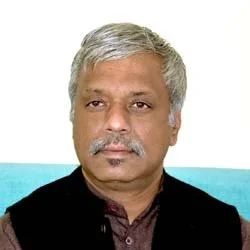
Dr Uttam Kumar Sinha is a Senior Fellow at the Manohar Parrikar Institute for Defence Studies and Analyses (MP-IDSA), New Delhi. A scholar of transboundary water governance, climate change and Arctic geopolitics, he holds a doctorate from Jawaharlal Nehru University. He served as Managing Editor of Strategic Analysis, MP-IDSA’s flagship journal published by Routledge, from 2012 to 2026.
He has held several prestigious international fellowships, including Senior Fellow at the Prime Ministers Museum and Library (2018–2020), Academic Visitor at the Harvard Kennedy School (2015), Chevening Gurukul Fellow at the London School of Economics (2008), and Visiting Fellow at the Peace Research Institute Oslo (2006).
Sinha represented India at the Council for Security Cooperation in the Asia Pacific (CSCAP) Study Group on Water Resources Security (2011–2012). From 2012 to 2013, he chaired the Near East and South Asia Regional Network on Water Dispute Resolution Mechanisms at the National Defense University, Washington, DC.
His recent books include Trial by Water: Indus Basin and India–Pakistan Relations (Penguin Random House, 2025) and the widely acclaimed Indus Basin Interrupted: A History of Territory and Politics from Alexander to Nehru (Penguin Random House, 2021). He has also co-edited two volumes on the Arctic: Changing Dynamics in the Arctic: Actors and Alliances (Routledge, 2026) and Arctic: Commerce, Governance and Policy (Routledge, 2015).
Sinha has co-edited four volumes on Prime Minister Narendra Modi and India’s foreign and strategic policy: The Modi Doctrine: New Paradigms in India’s Foreign Policy (2016), Modi 2.0: A Resolve to Secure India (2021), Modi: Shaping a Global Order in Flux (2023), and Modi: Energising a Green Future (2023).
He writes regularly on foreign policy, water and strategic affairs for leading national newspapers, including The Times of India, Hindustan Times, The Indian Express and The Pioneer.
Tell us about your early years – which city you were born in, where you were brought up and your academic and other interests during your early years.
I was born in Patna in 1967 and grew up in an Army family. As the son of an Army officer, I moved from one place to another during my formative years. This experience taught me adaptability, exposed me to different people and places, and gave me an early appreciation of diverse perspectives.
A particularly formative period was my father’s posting to the Indian High Commission in the United Kingdom between 1973 and 1977, when I undertook my early schooling there. I subsequently attended the Belgaum Military School, formerly known as the King George Royal Indian Military School, and continued my education in Bangalore before graduating from Hyderabad. In 1990, I joined Jawaharlal Nehru University (JNU), New Delhi, where I pursued my higher studies and completed my PhD.
My early interests reflected both my upbringing and my natural curiosity. I enjoyed meeting people, learning about different places and understanding their histories. Military history particularly fascinated me, perhaps unsurprisingly given my Army background. Sport was another abiding interest: I enjoyed both playing and watching cricket and football.
These experiences, in many ways, laid the foundation for my subsequent journey through journalism and, eventually, strategic and security studies. After completing my PhD, I worked in print journalism with The Pioneer newspaper before joining the Institute for Defence Studies and Analyses (IDSA), now the Manohar Parrikar Institute for Defence Studies and Analyses (MP-IDSA), in 2001.
Please tell us about your academic qualifications and fellowships, and the universities you secured them from, and in which years?
I pursued my postgraduate studies and PhD at Jawaharlal Nehru University (JNU), New Delhi, between 1990 and 1999. While working in IDSA, I was privileged to several distinguished institutions abroad. I was a Visiting Fellow at the Peace Research Institute Oslo (PRIO), Norway in 2006, followed by a Gurukul Fellowship at the London School of Economics and Political Science (LSE) in 2008. In 2015, I was an Academic Visitor at the Harvard Kennedy School, and from 2018 to 2020, I served as a Senior Fellow at the Prime Ministers Museum and Library (PMML), New Delhi.
What attracted you to your academic interests?
My academic interests developed from a combination of my early upbringing, my curiosity about history and my desire to understand how states pursue their interests in an increasingly complex international system. Over time, my interests expanded beyond conventional questions of war, peace and military power to examine the broader political, strategic and environmental factors that shape relations between states. I became particularly interested in how environmental issues, natural resources and ecological interdependence influence international politics. This led me to study transboundary rivers and their role in shaping relations between riparian states, especially in South Asia, where questions of water are closely intertwined with sovereignty, security, development and domestic politics.
My research interests have also extended to the Arctic, a region where climate change, resource competition, emerging maritime routes and the strategic interests of major powers increasingly intersect. The Arctic offers a particularly compelling example of how environmental transformations can reshape geopolitics and international security.
You have been associated with Manohar Parrikar Institute for Defence Studies and Analyses since a long time. Please tell us about the institute and what its “non-traditional” security initiatives are about?
The Institute for Defence Studies and Analyses (IDSA), now the Manohar Parrikar IDSA was established in 1965, in the aftermath of the 1962 India-China war and the growing tensions with Pakistan. The Institute emerged from a recognition that India needed a dedicated institutional capacity for independent research and informed thinking on defence, strategy and national security. Over the decades, it has developed into one of India's leading think tanks on defence, strategic affairs and international relations, providing a forum where scholars, serving and retired military officers, diplomats, civil servants and policymakers can engage with questions of national and international security. Having been associated with the Institute for over two decades, I have witnessed the evolution of its research agenda. While conventional military and strategic questions remain central to its work, the understanding of security has expanded considerably. Today, security cannot be understood only in terms of military capabilities, territorial defence or relations between major powers. Climate change, environmental degradation, energy insecurity, water scarcity, pandemics and other transboundary challenges can have profound implications for national security, economic stability and relations between states.
It is in this context that the Institute's work on non-traditional security assumes importance. The central idea is to examine security challenges that extend beyond conventional military threats, often transcend national boundaries and require interdisciplinary approaches. These issues frequently connect the domestic and international domains, and cannot be adequately addressed by any one ministry, discipline or country acting alone.
India has a large young, aspirational population. The government too has declared that it would like to make India a developed country by 2047. You have written extensively on important subjects like water, energy and climate change, all of which strongly influence this aspiration. How well do you think India is managing all of these (and any other factors you find worth mentioning) for it to realistically achieve this aspiration in the next 20-25 years?
I think India has a realistic opportunity to become a developed country by 2047, but the aspiration should not be understood simply as a target for higher GDP. Development ultimately has to mean a substantial improvement in the quality of life of India's citizens, and that requires sustained economic growth alongside investment in human capital, infrastructure, energy, water, health, education and institutional capacity. India therefore has to move beyond the question of how fast the economy is growing to ask what kind of economy it is creating and how widely the benefits of that growth are being distributed.
Energy will be central to this transformation. A developed India will require enormous quantities of reliable and affordable energy. At the same time, India cannot ignore the climate implications of its development trajectory. The challenge is therefore not to choose between development and climate action, but to find a pathway in which the two reinforce each other.
Water may prove to be an even more difficult challenge. India's economic ambitions are intimately connected to water. Water stress is also increasingly a question of federal and interstate politics. Climate change adds another layer of uncertainty by altering rainfall patterns, increasing the frequency of extreme events and making both floods and droughts more difficult to manage. India therefore needs to move from treating water primarily as a sectoral issue to treating water security as an element of economic and national security.
I would therefore see 2047 less as a finish line and more as a framework for thinking about the India we want to create.
What else or more should India do to manage important factors impacting this developmental goal?
India needs to think beyond the pursuit of economic growth and focus equally on the quality and sustainability of that growth. The first priority has to be human capital focusing on better education, healthcare, skilling and productive employment for its young population. A demographic dividend can become a liability if aspirations rise faster than opportunities.
Second, India needs a much more integrated approach to water, energy and climate security. Third, India needs to invest much more in climate-resilient infrastructure and cities, particularly as urbanisation accelerates. Finally, India will need stronger institutions and Centre–State cooperation. Many of the challenges that will determine India's development—water, energy, health, education, urbanisation and climate resilience—cannot be managed by the Union government alone.
Geopolitics also plays a critical role in impacting India’s economic ascent. How well is India managing geopolitical dynamics in its immediate neighbourhood? Is there something it can do differently?
India has broadly pursued a pragmatic approach, seeking to maintain relationships across competing geopolitical alignments while using its economic and strategic weight to deepen regional connectivity and cooperation. However, the neighbourhood remains one of India's more complex challenges. India needs to invest not only in strategic relationships but also in economic interdependence through trade, connectivity, energy cooperation, digital links and shared management of resources such as water.
India could also do more to view its smaller neighbours not simply through a security lens but as partners in India's own development. A stable and prosperous neighbourhood is ultimately an important asset for India's economic rise. Neighbourhood First therefore needs to become not merely a diplomatic slogan, but an economic and developmental strategy.
