Introducing: Pawan Verma
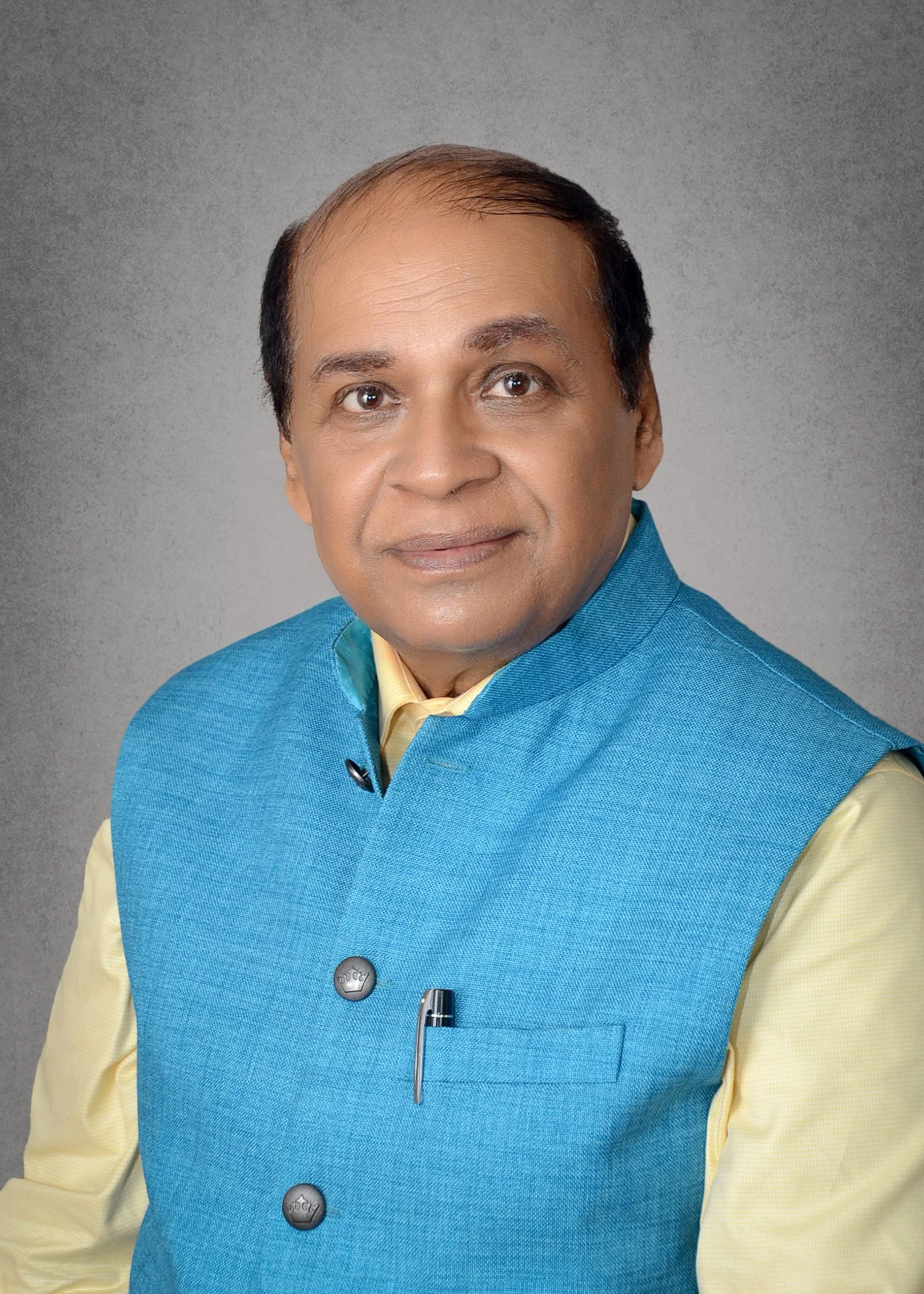
Pawan Verma is an award-winning author, contrarian thinker and high-impact speaker, with a legacy rooted in the Indian Knowledge System. With senior leadership roles in iconic organizations like LIC of India, Reliance Industries, Reliance ADA Group, and as the founding COO of Star Union Dai-ichi Life Insurance, Pawan brings decades of real-world wisdom to the stage and the boardroom. Known for blending practical corporate insights with the power of storytelling, he inspires audiences through his leadership books and gripping fiction thrillers. He has been awarded the REX Karmaveer Global Fellowship and REX Karmaveer Chakra Award by iCONGO, in association with the United Nations, for his relentless pursuit of innovative ideas and alternative actions for social transformation.
Tell us about your early years – which city you were born in, where you were brought up and your academic and other interests during your early years.
I was born and brought up in a small village in the Darbhanga district of Bihar in India. My early schooling, including graduation, took place in Darbhanga only.
My academic and other interests during my early years were in areas, such as debating, participating in essay competitions, writing for school and college magazines, playing chess, etc. I received several awards also in these areas.
My early interests were writing, reading, and sports. Journalism was not a planned career choice. I was selected as a Flying Officer candidate for the Indian Air Force, but a delay in my graduation results altered that trajectory. That unexpected turn led me, almost by chance, into journalism in 1983, when I joined The Sentinel in Guwahati as a trainee reporter.
Tell us which academic qualifications you hold, and from which universities? What were the years in which you secured them?
I have a Doctoral degree (H.C.) – Doctor of Advanced Studies (DAS) – “Management”, awarded to me in 2019 by the Azteca University, Mexico. I also did my MBA (Marketing) from Patna University, Bihar in 1994. Earlier, I completed my BA (Honours) in English Literature from the L N Mithila University, Darbhanga in the year 1974 and topped the University ranking list. I was writing the final examinations for my MA (English Literature) when I was selected for a job in LIC of India, based on an all-India competitive examination and therefore, had to postpone my academic pursuits.
Professionally, I have a Fellowship (Diploma) in Insurance (Year 2004) from the Insurance Institute of India, and a “Composite Broker” Certificate, issued by the National Insurance Academy, Pune in 2003. In addition, I completed the “Certified Corporate Directorship” Program in 2010, run by the Institute of Directors, New Delhi, under the aegis of the World Council for Corporate Governance.
What inspired you to switch professions to being a storyteller and motivational speaker?
Post my retirement in 2013, I wanted to pursue my passion for writing. At that point of time, Amazon Kindle was gaining popularity in the West. Hence, I published over a dozen e-books, mostly romantic fiction. Targeted at middle-aged women in the US and Western Europe, these books, published under a pen name, attracted huge readership.
While on the job, earlier, I had written regularly for some of the mainline national dailies and magazines, such as, the Times of India, Hindustan Times, The Pioneer, Economic Times, Indian Express, IRDA Journal, Insurance Times, BFSI Vision, etc. Most of these articles were “Middles” on the editorial pages of newspapers – short stories with some wit, humour and satire.
Once, I took these stories to a reputed Publisher with an idea to get them published in the form of a book. It was at that point that the Commissioning Editor suggested me to write a book on leadership. That led to my first book on leadership, “Age of the Imperfect Leader.” And the story goes on….
As regards public speaking, it had been part of my job during most of my career, and it has led me to address various professional conferences, industry forums and educational institutions, both in India and abroad. It is only a continuation of my passion for motivating others toward higher productivity and excellence.
When you interact with Indian students, what is your sense of their readiness for the professional world? Do you think India’s higher education system prepares them well for it? And how would you rate National Education Policy 2020 for preparing Indian students for meaningful careers?
India’s student population is among the most aspirational, resilient, and intellectually capable in the world. Strong analytical ability, adaptability, and work-ethic—particularly in STEM discipline remain their key strengths. Their creativity and ingenuity are well reflected in over 2,00,000+ startups in the country, 45% of which happens to be in Tier-2 and Tier-3 towns.
However, for a large number of students, professional readiness across the system remains uneven. While they often possess solid theoretical knowledge, many face challenges in application-oriented skills, including critical thinking, effective communication, teamwork, decision-making, and professional etiquette. The prevailing emphasis on examinations and credentials continues to limit experiential learning and career clarity, resulting in capable learners who are not always work-ready professionals.
India’s higher education system has achieved remarkable scale and access, supported by globally respected institutions such as IITs and IIMs. Yet, outside these centres of excellence, curriculum relevance, faculty-industry exposure, and industry–academia collaborations remain inconsistent. Rote learning still dominates assessment frameworks, constraining innovation and problem-solving capabilities.
The National Education Policy (NEP) 2020 represents a strategic inflection point. Its emphasis on multidisciplinary education, skill development, vocational integration, flexibility in learning pathways, and the inclusion of Indian Knowledge Systems aligns well with future workplace demands. NEP 2020 shifts the focus from content mastery to capability building—a critical requirement for meaningful careers in a rapidly evolving global economy.
The principal challenge, however, lies in execution. Political differences between the Centre and some States, variations in institutional capacity, lack of faculty readiness, and inadequate infrastructure threaten to dilute impact. If implemented in spirit and scale, NEP 2020 can transform India from a degree-centric education system into a future-ready talent ecosystem, capable of producing globally competitive, ethically grounded, and adaptable professionals. It can effectively usher in a civilizational renewal as well. By aligning modern pedagogical practices with Indian Knowledge Systems, it offers India a unique opportunity to shape globally competent yet culturally rooted learners—capable of leading with wisdom, resilience, and ethical clarity in the 21st century.
Based on your interactions with Indian professionals and students, their drive and talent, do you see India being on the right path to becoming a developed country in the coming decades? What more/else do you think India should do to achieve that aspiration?
As envisioned by Prime Minister Sri Narendra Modi, India has got an aspirational target of becoming a developed nation by 2047, when it completes hundred years of its independence from colonial rule. To this end, the country appears to be marching on a credible and irreversible path, largely driven by the energy, talents, and aspirations of its citizens, particularly its students, teachers and other professionals. Few countries today combine India’s demographic scale with its civilizational richness, intellectual depth, entrepreneurial dynamism, and growing global influence.
Indian professionals occupy leadership positions across technology, finance, healthcare, academia, and public policy worldwide. This reflects not only technical competence but also adaptability, resilience, and cross-cultural intelligence—qualities increasingly essential in a volatile global economy. At home, India’s expanding startup ecosystem, supported by digital public infrastructure such as Aadhaar, UPI, and GST, has reduced friction, enabled scale, and formalized economic participation.
Policy direction over the past decade also suggests strategic intent. Reforms in education through NEP 2020, manufacturing via PLI schemes, labour reforms, overhaul of GST rates, infrastructure expansion, and digital governance indicate a shift from short-term management to long-term nation-building.
However, India’s transformation from potential to prosperity is not going to be automatic. Going ahead, the first task would be to define the goal – what it means to be a developed nation. Accordingly, measurable objectives must be set so that different sectors are able to align their priorities and programs to achieve this goal. This will raise the commitment of its citizens to this cause as well.
Going forward, the country must accelerate the transition from credential-based education to capability-based learning, strengthening problem-solving, critical thinking, and applied skills. Institutional quality—judicial efficiency, regulatory certainty, and governance transparency—remains a critical determinant of sustained growth. Equally important is balancing welfare policies with productivity-driven growth to avoid long-term fiscal and incentive distortions. At the same time, India must be prepared to deal effectively with external security threats, internal insurgency and its demographic faultlines.
India must also deepen labour-intensive manufacturing to generate quality jobs and absorb its workforce at scale. Finally, the future will demand values-driven leadership, combining competence with integrity—drawing from both global best practices and India’s civilizational ethos.
To sum up, India’s greatest advantage is its human ambition. Aligned with institutional reform and ethical leadership, India is well-positioned to achieve a developed-nation status in the coming decades.
What practical value do you think India’s ancient texts bring to the world today?
The world today has seen unprecedented scientific and technological advancements, coupled with unbounded material progress. While it has led to huge physical comforts and ease of living, it has also produced a fractured world, broken homes and individuals with deep psychological strains.
Under these circumstances, the ancient Indian texts bring a deeply practical value to the modern world, precisely because, they do not just address our external systems they address our inner self as well. The ancient Indian sages had understood the inner engineering of the human body and the mind, and developed ideas and practices that not only help us understand our external world, but they also help us lead a healthy and purposeful life by following balanced, meaningful, and ethical actions.
First, they provide inner technologies—methods for mastering the mind, emotions, and desires. Texts like the Bhagavad Geeta, Upaniṣhads, and Yoga Sutras tell us how to act with clarity under pressure, remain steady amid success and failure, and reduce anxiety through self-awareness and detachment. These insights deeply influence our mental health, leadership resilience, and personal well-being.
Second, the ancient Indian texts define success and leadership differently. They emphasize Svadharma (contextual responsibility), selfless action, humility, and compassion—qualities urgently needed in governance, business, and social institutions. The model of leadership, exhibited in these texts, is based not on dominating others; but on the inner authority, grounded in ethical restraint. This is something, even today, the modern world is trying to learn the hard way.
Third, these texts offer a holistic worldview, where philosophy, religion and spirituality meet modern science. The philosophy of the interconnectedness of the Self, society, and nature propounded in these literatures, anticipates modern ecological thinking and sustainable living. Fundamental concepts, such as, cosmic harmony (Ṛta- ऋत), balance of the guṇas, and non-violence (ahiṃsa) predate the contemporary call for balanced growth and development, sustainable living, and responsible innovation.
Finally, in today’s highly polarized world, India’s ancient texts promote pluralism, dialogue, and the spirit of integration and tolerance. They advocate multiple paths—knowledge, action, devotion, meditation – and acknowledging diversity in human temperament. All these are the need of the hour for global peace, prosperity and march toward a better future.
Are you able to summarise India’s ancient texts such as Vedanta and Bhagvad Geeta for us?
Vedanta – A Summary
Introduction
Vedanta is one of the six major schools of Indian philosophy, rooted in the Upanishads. It explores the nature of reality, the self (Atman), and the ultimate truth (Brahman). Its central message talks of attaining liberation (moksha) through knowledge, devotion, and meditation.
Literally meaning, “the end of the Vedas”, Vedanta is the philosophical culmination of Vedic thoughts, contained in the Upanishads, which are the concluding parts of the Vedic texts. It is not a single doctrine but a family of traditions interpreting the same core texts:
The Upanishads (philosophical dialogues)
The Brahma Sutras (systematic summaries)
Bhagavad Gita (spiritual dialogue)
Central Inquiry of Vedanta
At its core, Vedanta seeks to answer the most fundamental questions in human consciousness:
Who am I?
What is the nature of reality?
What is the cause of human suffering?
How can one attain lasting freedom and peace?
Rather than prescribing certain belief systems or rituals, Vedanta offers a rigorous framework for understanding reality, identity, and freedom by explaining certain basic concepts. Once these concepts are internalized by an individual, it provides him / her inner clarity amidst outer complexity.
Core Concepts
Brahman
According to Vedanta, Brahman is the ultimate, infinite reality—formless, eternal, and beyond perception. It is the source and essence of all existence, transcending time, space, and causation. In Vedanta, Brahman is pure consciousness, unchanging and absolute, underlying the universe yet untouched by its multiplicity.
Atman
Atman is the inner self, the eternal soul beyond body and mind. It is pure consciousness, identical with Brahman. Realizing Atman means recognizing one’s true nature as infinite, free, and divine, distinct from worldly identities and transient experiences.
Maya
Maya is illusion—the cosmic power that veils reality and projects multiplicity. It makes the eternal appear finite, and the infinite seem limited. Through Maya, the world of names and forms arises, obscuring Brahman’s unity. Liberation requires piercing this veil to perceive truth.
Avidya
Avidya is ignorance—the fundamental misunderstanding of reality. It causes identification with body, mind, and ego, binding beings to suffering and rebirth. Rooted in Maya, Avidya prevents realization of Atman’s unity with Brahman. Knowledge (Vidya) dispels Avidya, leading to self-realization.
Moksha (Liberation)
Moksha is freedom from ignorance, illusion, and from the cycle of birth and rebirth. It is the realization of Atman’s oneness with Brahman, transcending duality, and worldly bondage. Moksha brings eternal peace, bliss, and unity with the infinite, as individuality dissolves into pure consciousness.
Major Schools of Vedanta
Over the ages, multiple schools of Vedanta have emerged, each offering a distinct understanding of the relationship between Brahman (ultimate reality), Atman (self), and the world. These branches differ primarily in how they interpret unity, difference, and devotion, while all affirm liberation (mokṣa) as the highest goal.
Given below is a brief on the three major schools of Vedanta:
Advaita Vedanta (Non-Dualism)
Propounded by Adi Shankaracharya, Advaita Vedanta tells us that Brahman alone is real, while the world is mithya (dependent reality). The individual self (Atman) is identical with Brahman. Ignorance of this causes bondage, and liberation arises through self-knowledge (jnana), leading to the realization of non-dual consciousness.
Vishishta Vedanta (Qualified Non-Dualism)
This school of Advaita, founded by Ramanuja, holds that Brahman is one, yet qualified by attributes, with souls and the universe as real parts of Him. Individual selves retain their identity, but they depend on God. Bhakti and surrender are central, and liberation means eternal, loving union with a personal Brahman.
Dvaita Vedanta (Dualism)
Dvaita Vedanta, propounded by Madhavacharya asserts that there is a permanent distinction between God, soul, and matter. God is supreme and independent; souls are dependent and distinct. Individuals attain liberation through devotion and divine grace, not through identity with God. Difference, hierarchy, and devotion define this realist philosophical system.
Conclusion
Vedanta offers a philosophy of achieving inner freedom through enlightened engagement with the world. It tells us that liberation comes from realizing the true nature of the self and its unity or relationship with the ultimate reality, Brahman. In essence, it implies that lasting peace does not come from changing one’s external circumstances, but from rightly understanding oneself and the ultimate reality. Once internalised, this philosophy helps us re-shape our vision from “I am a limited individual struggling in the world” to “I am the limitless awareness in which the world appears.”
Over the ages, this philosophy has profoundly shaped Hindu spirituality, theology, and culture, and has become the philosophical heart of Hinduism. It has influenced reformers like Swami Vivekananda, who presented Vedanta as a universal philosophy of spiritual freedom. While its ideas continue to inspire modern philosophy, psychology, and interfaith dialogue, it is attracting the attention of Quantum scientists also, as they try to understand the universe in its different manifestations.
Shrimad Bhagavad Geeta
Introduction
Shrimad Bhagavad Geeta, meaning “The Glorious Song of God,” is a sacred and foundational text of the Indian philosophy and thought. Embedded in the classic epic, “Mahabharata,” it is presented as a dialogue between Lord Krishna and warrior Arjuna on the battlefield of Kurukshetra, just before the beginning of the great war between the Pandavas and the Kauravas. Comprising of 700 shlokas, organized across 18 chapters, it is not merely a religious scripture; it is a practical philosophy for living and leading in turbulent times. By harmonizing duty, action, knowledge, and devotion, it offers a holistic roadmap for living a meaningful, balanced and spiritually awakened life – engaged in the world, yet inwardly free.
Context
At the beginning of the Kurukshetra war, while the rival armies are facing each other, Arjuna, a capable warrior is struck by moral and ethical paralysis at the prospect of fighting his own elders, relatives and teachers. He lays down his weapons, questioning the meaning of duty, righteousness, and life itself. It is at this point that Lord Krishna, his charioteer and divine guide, responds by imparting the profound spiritual wisdom that lifts Arjuna out of his debilitating moral and psychological crisis and gives him the spiritual strength to fight the war.
The Essence of Lord Krishna’s Teachings: The Geeta is essentially a universal manual for humanity to lead a meaningful, purposeful and spiritually fulfilling life. Krishna enunciates certain inter-related philosophical concepts, which, once internalized, can culminate in one’s inner freedom, leading to liberation (moksha) - acting in the world without bondage to outcomes.
To understand the message of the Geeta, it is necessary to appreciate some of the basic concepts that are inter-related and form the central philosophical foundation of Lord Krishna’s teachings:
Dharma Yoga (Path of Righteous Duty)
Krishna says that every individual has a Svadharma—one’s own duty, determined by a combination of one’s nature (guna), aptitude, role and life context. He asserts that ethical action is not abstract or uniform, but situational and personal. Performing one’s Svadharma sincerely—even imperfectly—is superior to imitating another’s duty flawlessly. Thus, Svadharma anchors action in authenticity and responsibility, reducing inner conflict and moral confusion. When practiced through Karma Yoga, Svadharma becomes a means of inner growth rather than ego-driven obligation. The Geeta thus presents Svadharma as the foundation for purposeful action, social harmony, and spiritual progress while remaining fully engaged in the world.
Karma Yoga (Path of Selfless Action)
One of the central themes of the Geeta is the doctrine of Karma Yoga, the path of selfless action. Krishna instils in us the values of Nishkam Karma that demands individuals to focus on effort and intent without getting attached to its outcomes. He suggests that the focus on the possible outcomes of one’s action leads to anxiety and ethical compromise. He asserts that work performed as a higher offering becomes a means of inner growth. This approach to work helps build resilience among individuals as their actions are guided by values and ideals, and they do not run the risk of being compromised by short-term gains or external validation.
Jnana Yoga (Path of Self-Knowledge and Wisdom)
Jnana Yoga, as presented in the Bhagavad Geeta, is the path of knowledge and discernment that leads to liberation (mokṣa). It is not mere intellectual learning, but direct insight into the true nature of the Self (Atman) and reality. The Jnana Yoga tells us that the Atman is unborn, eternal, and unaffected by action, while the body and mind are part of changing nature (prakṛti). It further explains that suffering arises from ignorance (avidya)—the mistaken identification of the Self with the body, mind, emotions, and roles. Jnana Yoga removes this ignorance through viveka (discrimination between the eternal and the transient) and vairagya (detachment from what is impermanent).
This knowledge dissolves fear, attachment, and ego, enabling a person to act with clarity and freedom.
Bhakti Yoga (Path of Devotion)
Bhakti Yoga is the path of devotion, surrender, and loving trust in the Divine. Krishna presents bhakti not as ritualism, but as an inner attitude of wholehearted dedication, where actions, thoughts, and intentions are offered without ego. Through bhakti, the seeker dissolves fear, pride, and anxiety by anchoring life in a higher purpose. The Geeta emphasizes that sincere devotion is accessible to all, irrespective of status or learning, and that love sanctifies action and knowledge alike. In essence, bhakti becomes the emotional foundation that transforms duty into joy and effort into grace.
Dhyan Yoga (The Path of Meditation)
Dhyana Yoga is the path of meditative discipline, leading to the mastery of the mind and inner stillness. Bhagwan Krishna describes it as the practice of withdrawing the senses, focusing the mind, and maintaining steady awareness of the Self. Through sustained meditation, the seeker overcomes restlessness, desire, and fear, attaining equanimity and inner clarity.
Dhyana Yoga prepares the mind for self-knowledge and deepens devotion by cultivating silence and concentration. Ultimately, it harmonizes body, breath, and mind, enabling a person to remain centered and peaceful amid the fluctuations of life.
The Three Gunas (Three Qualities)
Bhagwan Krishna explains to Arjuna that the three gunas of Sattva, Rajas and Tamas are inherent in all the prakriti (nature) in different proportions. They shape and guide human behaviour and experience. Sattva embodies clarity, harmony, wisdom and balance, leading to knowledge and inner peace. Rajas is characterized by passion, ambition, desire, and restlessness, driving action and attachment to results. Tamas represents inertia, ignorance, confusion, and resistance to change, resulting in delusion and negligence.
All individuals possess a dynamic mix of these guṇas, which fluctuate over time and situations. The Geeta teaches us that self-awareness and disciplined living can cultivate sattva, regulate rajas, and transcend tamas, thereby enabling the seeker to rise beyond all three toward inner freedom.
Moksha (Liberation)
The Bhagavad Geeta tells us that the purpose of all our activities in life is to attain Moksha (liberation). Moksha is essentially the state of inner freedom and self-realization, where one is liberated from ignorance, fear, and bondage to action and results. It is not escape from life, but freedom within life—freedom from ego, attachment, and suffering. By following one’s Dharma and through right knowledge, selfless action, devotion, and disciplined meditation, the seeker realizes the true Self, attaining lasting peace and equanimity beyond birth and death.
The Vishwarupa (Vision of the Universal Form)
In order to enable Arjuna to grasp these philosophical concepts, Krishna shows him his Vishwarupa. In essence, Krishna reveals the infinite, cosmic reality underlying all existence—time, creation, preservation, and destruction, unified in one vision. It shows that the Divine governs all existence and that all beings, events, and outcomes arise within a vast, interconnected order beyond human control, demanding humility, surrender, and responsible action without ego or attachment.
Conclusion
The Bhagavad Geeta presents not a collection of isolated doctrines, but a unified philosophy of living. Svadharma provides the context of one’s responsibility; Karma Yoga prescribes selfless action within that role; Bhakti Yoga infuses action with surrender and trust; Dhyana Yoga steadies the restless mind; and Jnana Yoga culminates in clear self-knowledge. The three guṇas explain inner tendencies that must be understood and transcended, while mokṣa emerges as the natural outcome of this integrated practice—freedom from inner bondage while fully engaged in life. Krishna’s Virat Rupa reminds us that individual effort unfolds within a vast cosmic order, encouraging humility without passivity. Together, these principles form a seamless guide for purposeful action, inner growth, and liberated living in the midst of life’s complexities.
