Introducing: Arvind Gupta
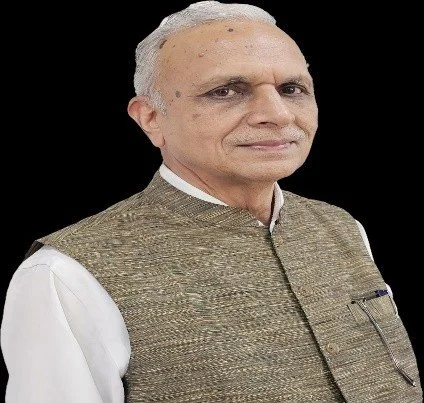
Dr Arvind Gupta is the Director of the Vivekananda International Foundation, New Delhi. His interests are in strategic affairs including India’s foreign policy, national security, science and technology, India’s strategic thought and Indian civilisation. He was the Deputy National Security Adviser and Secretary, National Security Council, Government of India during 2014-17. Earlier, he was Director-General of the Institute for Defence Studies and Analyses, Ministry of Defence, New Delhi during 2012-2014. A former career diplomat, he has served in the Ministry of External Affairs and Indian missions abroad. He has had over two decades long experience in dealing with national security issues in policy and analytical domains.
He speaks regularly at the various Indian universities, military, para-military, police, and diplomatic academies on foreign policy and national security issues. He has guided research students at premier educational institutions. He is a member of the Board of Studies of the School of International Studies at Jawaharlal Nehru University, member of the governing council of Indian Institute for Mass Communication (Deemed to be University).
Author of six books, his most recent one (co-authored with Rajesh Singh) being The Silent Enemy: Non-Traditional Challenges to National Security (BluOne Ink, 2025). His other books are: Opportunity for India in a Changing World (KW publishers, 2021); How India Manages Its National Security (Penguin, 2018), Ideology and Soviet Foreign Policy: Lenin to Gorbachev (Venus, 1993), At the Cutting Edge (NISCom, 1996), A dictionary of New Science and Technology Terms (Vikas, 1998).
He has edited several books including co-edited India's Foreign Policy: Surviving in a Turbulent World (Sage, 2020) with Anil Wadhwa, and Vasudhaiva Kutumbakam: The Relevance of India's Ancient Thinking to Contemporary Strategic Reality, (Aryan, 2020) with Arpita Mitra.
Tell us about your early years – which city you were born in, where you were brought up and your academic and other interests during your early years.
I was born in Nurpur, Kangra district, in Himachal Pradesh in 1953. Raised in Delhi. I had a regular, happy childhood and middle-class upbringing.
Tell us which academic qualifications you hold, and from which universities? What were the years in which you secured them?
I did my M.Sc. in Physics from Delhi University and then moved to Tata Institute of Fundamental Research, Mumbai, for research in Solid State Physics. After two years, I worked for the Oil and Natural Gas Commission (ONGC) and, thereafter, the State Bank of India (SBI). I switched to a career in diplomacy in 1979. While in service, I did my M.Phil. and Ph.D. in Soviet Studies, School of International Relations, Jawaharlal Nehru University.
What attracted you to your profession?
Joining the civil service or public sector undertakings was very popular in those days amongst the students of Delhi University. This was the time when the government was expanding in every sector, from education to banking, from agriculture and health to science and technology. India has conducted its ‘peaceful nuclear explosion’ and launched a satellite in space. The green revolution was taking hold. Most of the good-quality jobs were in the government and its undertakings. The private sector was small and not as well developed as it is today. After spending some time in Oil and Natural Gas Commission and State Bank of India, I appeared for the civil service exam conducted by the Union Public Service Commission and joined the Indian Foreign Service (IFS) in 1979, based on my rank in the merit list. There was no special reason for joining the IFS.
Would you like to share with us your most fulfilling moments in your career?
My career has been quite unlike the conventional career of IFS officers. I have spent long years at the headquarters in Delhi dealing with a mix of diplomatic and national security issues. I have also spent long years in the academic field, spanning science and technology as well as international affairs. After serving in Moscow, London and Ankara in three different stints, I moved to the newly set up National Security Council Secretariat (NSCS) in 1999, where I had two tenures totalling eleven years. I had the honour of serving as Deputy National Security Advisor from 2014 to 2017 at the NSCS. I dealt with a wide variety of diplomatic, technological and national security issues in their analytical and policy dimensions. I interacted with a large number of people in different government departments in the agencies dealing with national security. I also have had the occasion of participation in Track 1, 1.5 and Track 2 dialogues on a variety of subjects. Developing a holistic view of international policies, strategy, and national security has been a fulfilling experience.
I also headed the prestigious Institute for Defence Analysis, one of the oldest think tanks funded by the Ministry of Defence. After I demitted the office of the Dy NSA, I was appointed as the Director of the Vivekananda International Foundation, a Delhi-based prominent private think tank which looks at strategic issues from national and civilisational perspectives. I have also been involved in academic research and education. I have written six books and co-edited several.
India aspires to be a developed country by 2047. What is your vision of India’s national security posture as a developed country? Do you believe it is achievable for India by that year?
The global security environment is changing rapidly. A new balance of power is emerging as Western dominance is challenged by China, Russia and emerging powers. The world is becoming multipolar, but Western hegemony has not entirely disappeared, particularly in the fields of finance and technology. The middle powers are playing an important role in regional security and development. The institutions of global governance are not performing optimally. New conflicts erupt frequently. The international community’s ability to handle these conflicts is being tested.
As India rises, it will face a variety of traditional and non-traditional security challenges. India will have to strengthen its comprehensive national power to meet these challenges. It will need strong deterrence, strong conventional military, and strong technological capabilities to deal with these challenges. At the same time, India will have to contribute by ideas and actions to global peace and security. We have provisions, but we need to build our economic, military and technological strengths. As India rises, there would be pushback from adversaries. There are also challenges with regard to internal cohesion and social stability. But India has a lot of experience in dealing with these challenges. This is a time to move ahead with determination and purpose. We can do it.
What do you see as India’s most significant internal and external initiatives towards achieving its longer-term national security goals? Is there anything more India should do?
India has unsettled borders with Pakistan and China. India faces a persistent threat of cross-border terrorism. Ideally, India should settle its borders with China and deter cross-border terrorism from Pakistan. These issues are not going to be resolved any time soon. China and Pakistan's strategic partnership has expanded as well as deepened. India’s neighbourhood has become increasingly unstable. Maritime security is also critical for India’s security.
To deal with these issues, India needs to strengthen technological sovereignty, build its economic, military and security capabilities and follow smart diplomacy within the framework of strategic autonomy, Vasudhaiva Kutumbakam (the world is one family), self-reliance and Vishwabandhutva (universal brotherhood). It must strengthen its civilisational attributes, and develop hard and soft power.
Which internal and external factors can challenge India’s national security aspirations? Is India well-positioned to manage those?
The external environment is not in India’s control. The outcome of the rivalry between the US and China will decide the shape of the new world order. Nuclear disarmament has taken a back seat. Non-traditional security issues like climate change, organised crime, demography, migration, health, water and food security are assuming alarming proportions. India’s security cannot remain unaffected. I have argued in my recent book The Silent Enemy that Indian security planners must take a holistic view of security. We have the capability to deal with diverse security issues, but we need to strengthen security planning.
Which are the most important countries for India to retain/cultivate ties with to achieve its national security goals, and what can India leverage from those countries?
The world is becoming multipolar. We will have to engage with the major powers, the middle powers and generally with the Global South. We should not get involved in prolonged conflicts. Our approach should be to build our strength and bide our time. China followed this strategy for several decades. By and large, India will have to develop its own capacities to ensure its national security. It will have to reduce its dependence on other countries for defence equipment. It will need to acquire technological sovereignty to the extent possible. Its diplomacy should aim to promote greater peace and stability. Our diplomatic engagement should be aimed at creating an environment conducive to India’s growth.
